
Research
The Most Distant Explosions
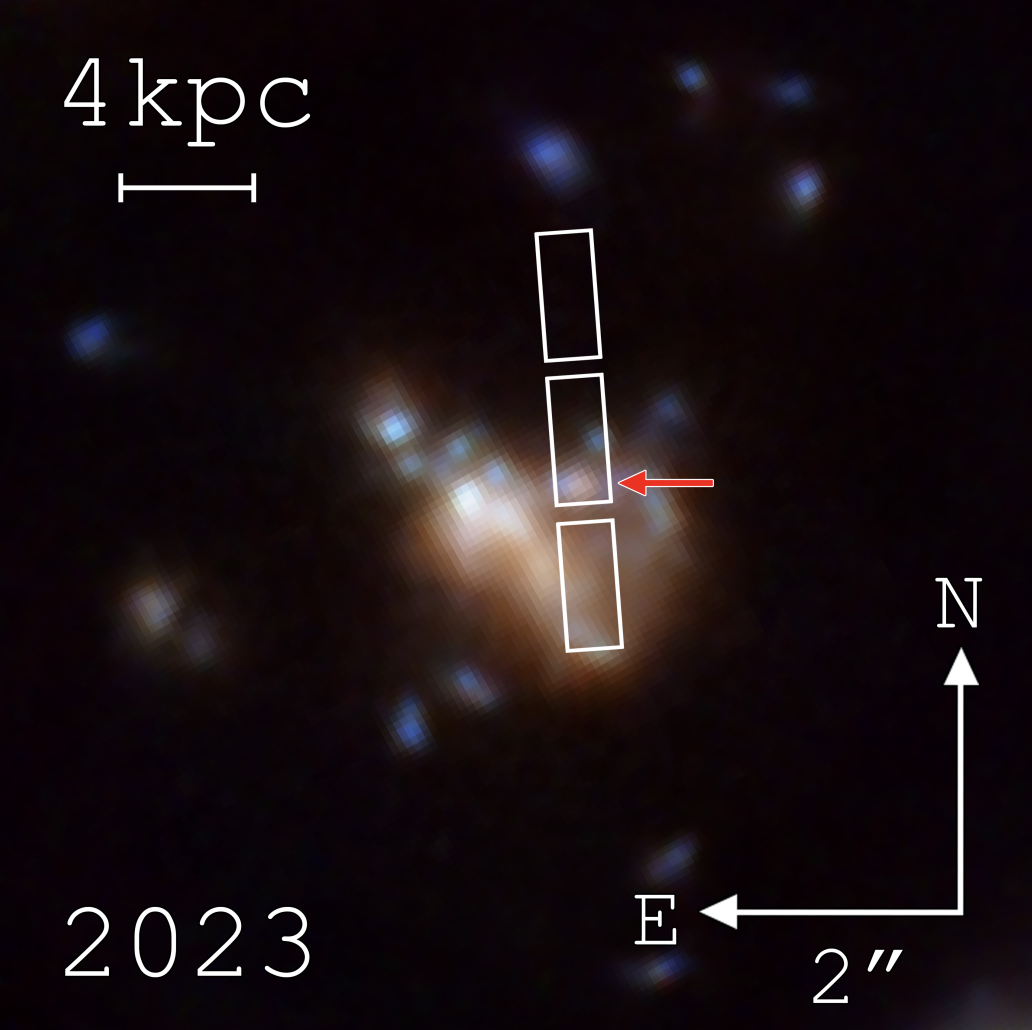
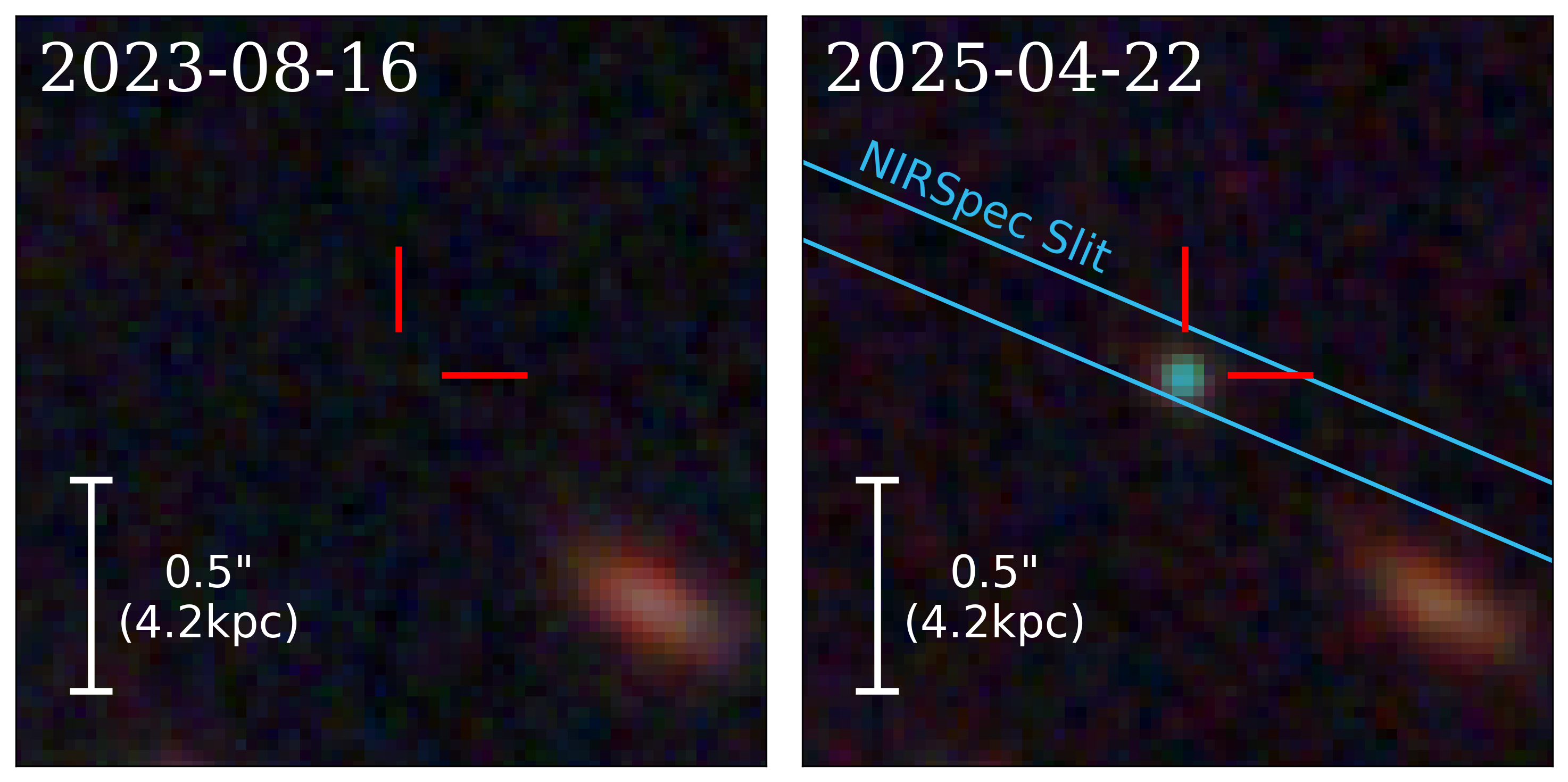
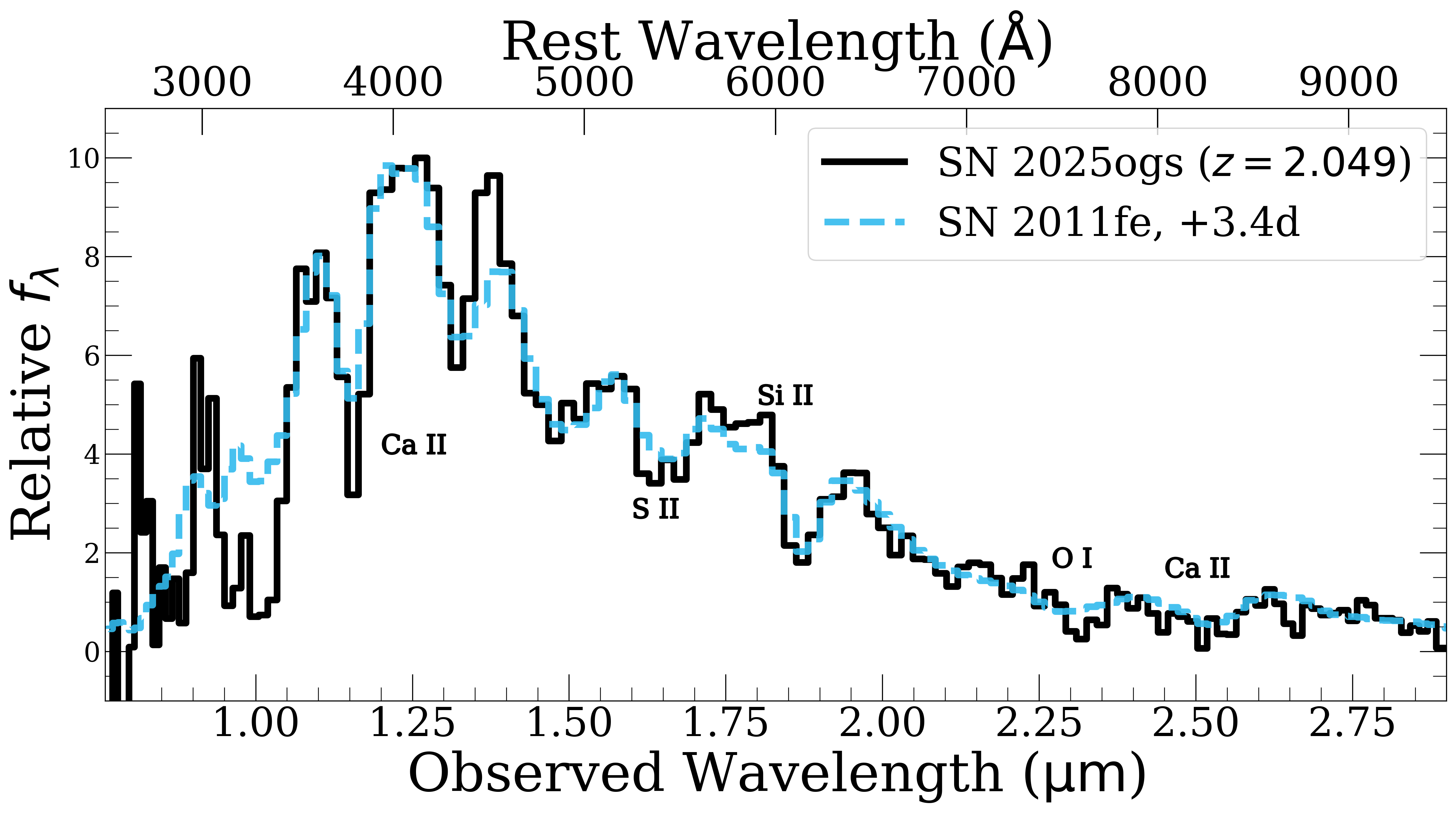
The remarkable capabilities of JWST have opened a new window for transient astronomy. Recently, I led the spectroscopic analysis (Siebert et al. 2026) of a high-redshift (z = 2) SN Ia that our team followed-up with JWST. This SN is an excellent spectral match to normal-SNe Ia. The high-S/N of its NIRSpec spectrum allows for precise characterization of its spectral features like ejecta velocity and offers a key point of comparison for Roman, anchoring evolution of SN Ia spectroscopic properties at z > 2.
The recent JADES Transient Survey DeCoursey et al. 2024 observed multiple epochs of the same patch of sky to unprecedented depth (~30 mag). Several high-redshift supernovae were discovered in these data allowing for further spectroscopic follow-up. In Siebert et al. 2024b), we identified one of these SNe as a broad-lined Type Ic supernova at z = 2.83. This is the highest redshift stripped-envelope supernova discovered to-date. The presence of this rare subclass in this small sample could indicate that their rate is enhanced at high-redshift.
Building the White Dwarf Supernova Zoo
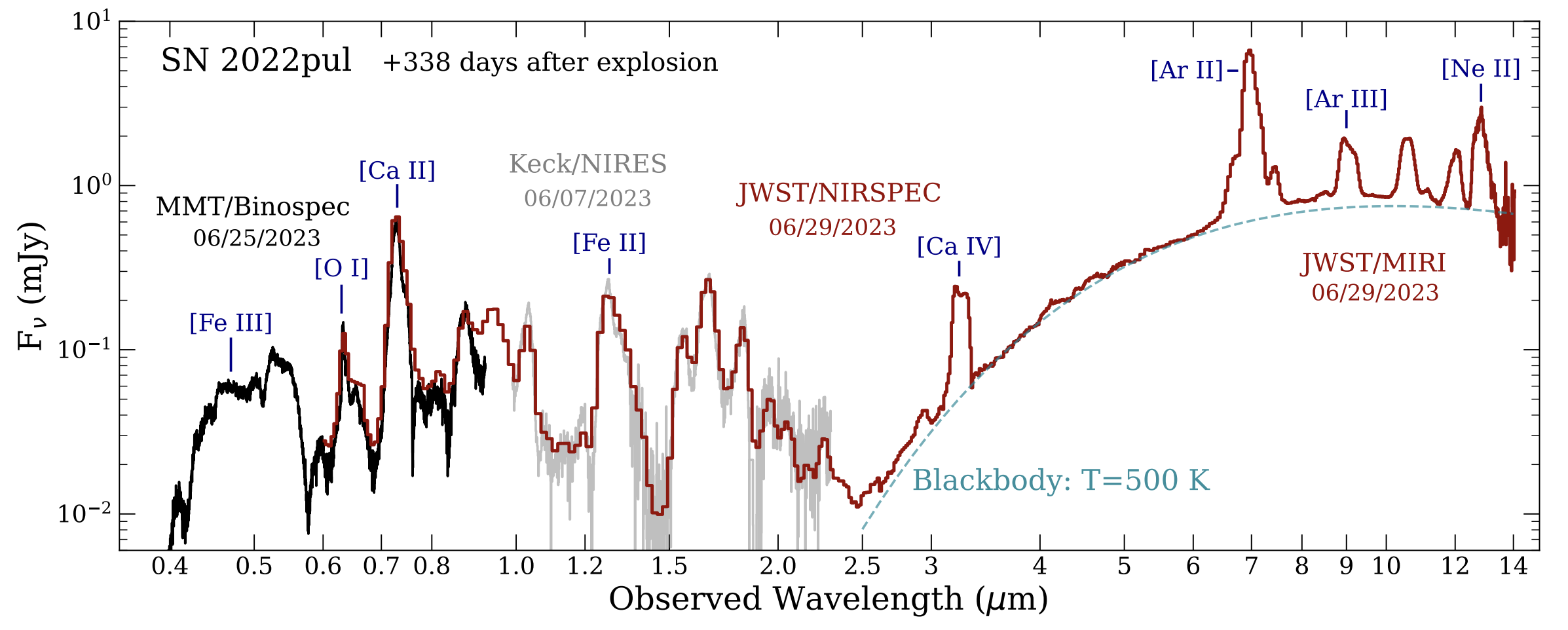
Nebular spectroscopy can reveal much about the progenitor systems and explosion mechanisms of the large diversity of White Dwarf supernovae. Detailed studies of some individual supernovae show evidence for double-detonation explosions, surviving companion stars, and violent mergers of White Dwarfs (see Siebert et al. 2020b, Siebert et al. 2023, and Siebert et al. 2024a)
Improve Cosmological Distance Measurements with Large Spectroscopic Samples
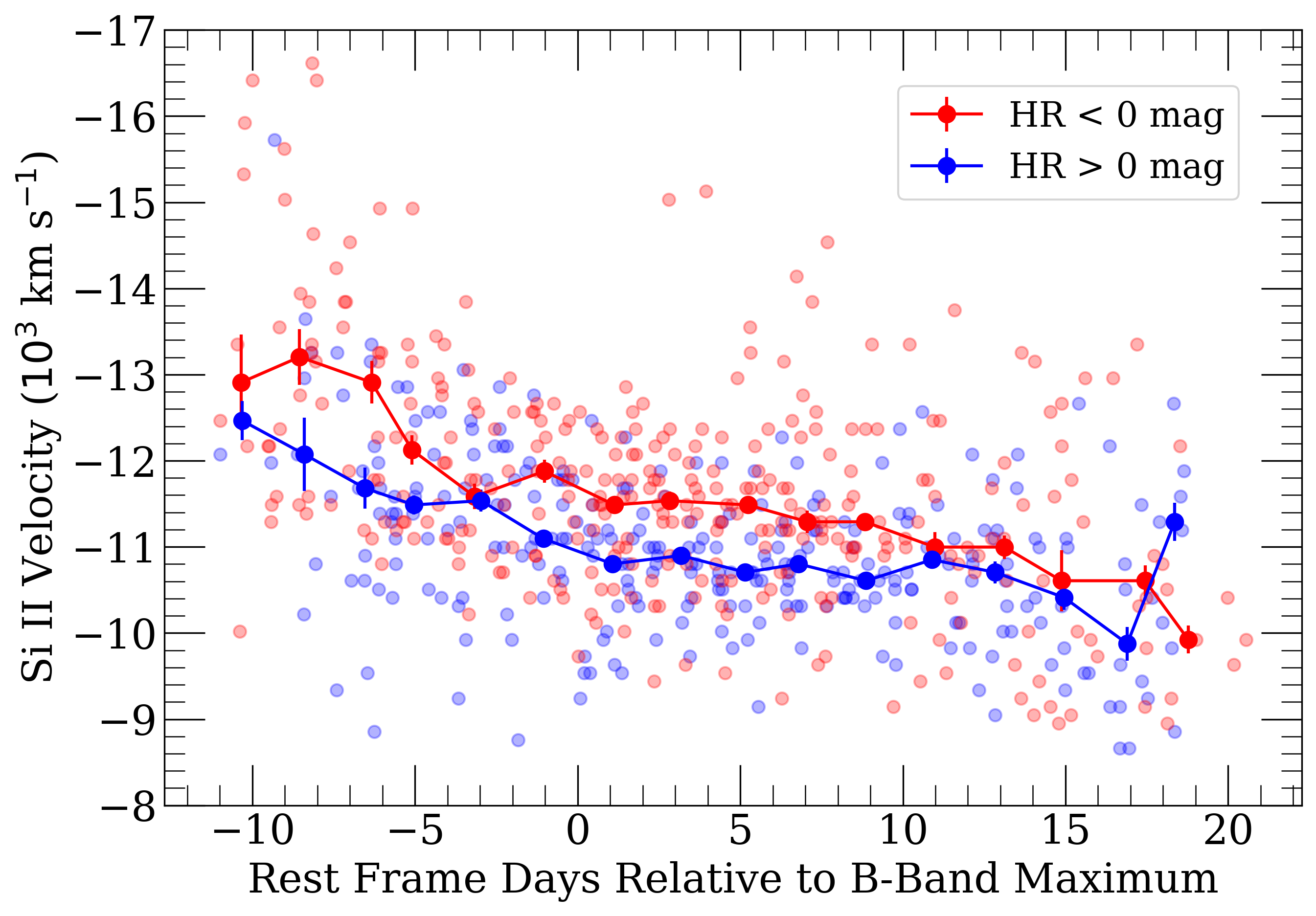
We used kaepora to investigate the spectra of 126 SNe Ia that have cosmological distance measurements. Using composite spectra, we found evidence that SNe with negative Hubble Residuals (those with underestimated distances relative to a cosmological model) tend to have higher velocities. In the figure to the right, we show the velocity evloution of the Si II $\lambda$6355 feature for the positive/negative (blue/red) Hubble Residual samples. See Siebert et al. 2020a.